← Back
Grounding in Nature When Things Feel Overwhelming

Grounding in Nature When Things Feel Overwhelming

January 10, 2026
By Huy Ing Lay
5 mins

Entering nature does not always happen from a place of calm. Often, it happens during moments of overwhelm, when thoughts race, when the chest feels tight, or the body becomes numb or disconnected. In times of uncertainty, loss, or sudden change, emotions can be difficult to name, like a river mixed with mud where the water turns unclear. The mind feels crowded, the nervous system overstimulated, and what becomes clear is the need for space where something steady to hold a body and mind under strain.

Nature offers a regulating presence that always invites us to be more mindful and grounded without saying a word. The ground remains steady regardless of anxiety, exhaustion, or emotional confusion. Trees and rivers are as they are. This quiet consistency can create a small sense of safety, an environment where the body and mind are allowed, even briefly, to slow down. Gradually, attention may shift away from looping thoughts and toward present-moment experience. Sensation replaces some of the mental overload.
e03823_6bcad817ed2d4d00a5fa3e6ce3cab834~mv2 (1).avif
Nature offers a regulating presence that always invites us to be more mindful and grounded without saying a word.

When overwhelm takes hold, the nervous system is often working beyond its capacity. In natural settings, there is less stimulation and fewer demands. The pace softens. The body may begin to regulate itself before there is any conscious attempt to relax. This isn't really about escaping reality, but giving the nervous system a moment to recover and ground itself.

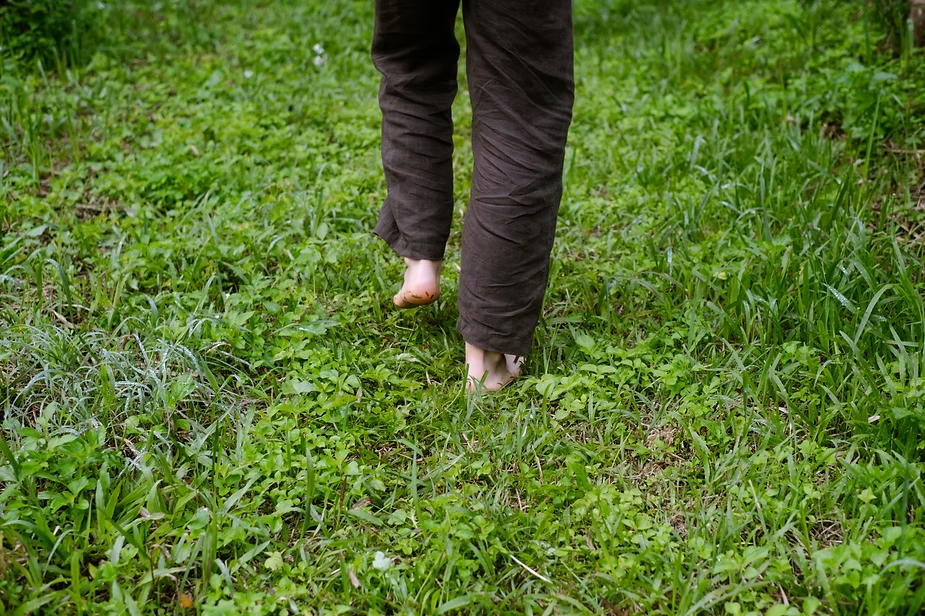
One simple way to pause and ground in nature is to walk slowly barefoot, bringing attention to each step as the feet meet the ground, and staying with whatever sensations arise. This gentle practice can help bring awareness back into the body and into the present moment, rather than becoming absorbed in running thoughts.


This process is not always comfortable. Uneven ground, heat, insects, restlessness, or intrusive thoughts may arise. Yet this discomfort is often part of the experience. It anchors awareness in the present and reminds the body that sensation does not automatically mean danger or threat. Grounding in nature supports a return to the body, not as a fixed or improved version of the self, but simply as it is in this moment. It helps reconnect fragmented attention, restore a sense of safety, and re-establish contact with something stable when the inner world feels chaotic.
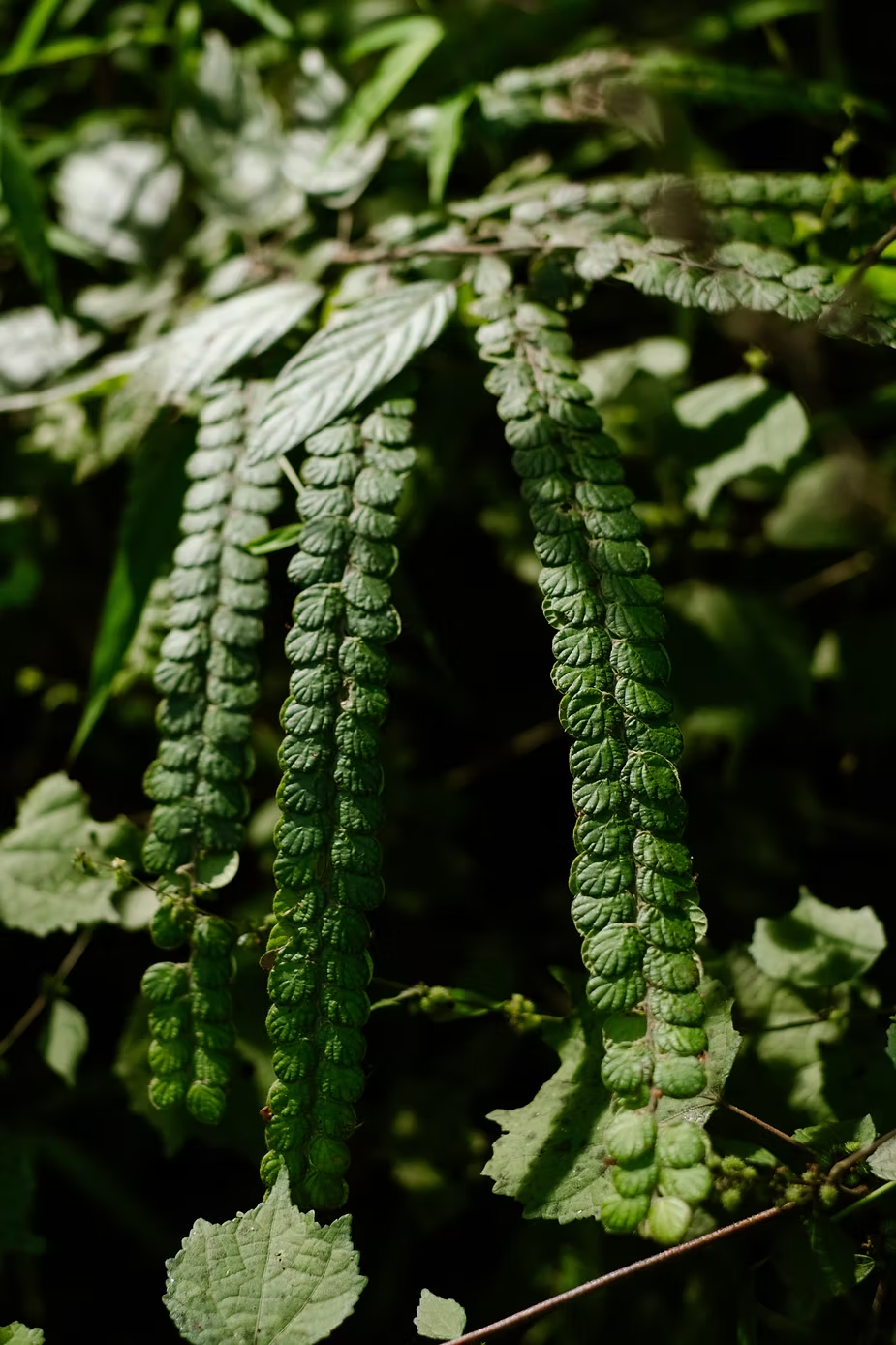
Nature does not take suffering away. But it can offer a place where the weight of it is held more gently, supporting mental and physical well-being when the world feels overwhelming.


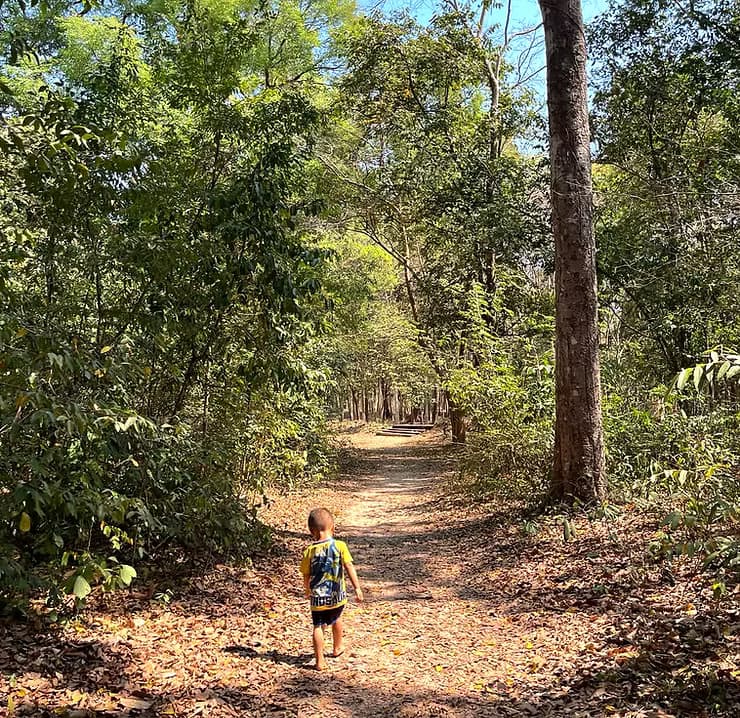
Even brief moments in nature can be supportive. A few minutes may be enough to feel the feet again, to notice the breath, or to create a small pause in mental overload. These moments do not erase hardship, but they can help people stay connected to themselves during difficult times. Nature does not take suffering away. But it can offer a place where the weight of it is held more gently, supporting mental and physical well-being when the world feels overwhelming.
Tags
GroundingMental HealthWellbeing
Huy Ing Lay

Author

Huy Ing Lay

Marketing I Nature Connection & Awareness

Huy Ing Lay (Hill) is a facilitator specializing in deep nature connection and ecotherapy. Her work weaves together principles of ecopsychology with immersive, sensory-based practices that restore a vital, reciprocal relationship between people and the natural world. With a focus on presence, awareness, and lived sensory experience, Hill facilitates individuals beyond intellectual understanding and back into direct connection.Through this process, participants rediscover a profound simplicity of being and an embodied sense of belonging within nature.

Related Articles

We Chose the Ancient Landscapes of Angkor to Raise Our Child

We Chose the Ancient Landscapes of Angkor to Raise Our Child

It was about two years ago, my two-year-old boy walking slowly at the entrance of an old temple in Angkor. We didn’t lead him—we just followed his pace. On both sides stood tall trees with a wide, sheltering canopy, but it wasn’t only the big things that felt alive; small plants, flowers, and the gentle song of birds along the path made the whole place feel welcoming. The ground was soft and sandy, smooth under his feet, and he kept stopping to touch, to look closer. Fallen leaves, spinning seeds, butterflies of different colours—each one was enough to hold his attention, and for that moment, we began to see the world the same way he does.

3 min read mins
Nature as a Learning Field: A Foundation for Holistic Learning and Growth

Nature as a Learning Field: A Foundation for Holistic Learning and Growth

At YEP Academy, we believe that learning does not only happen inside classrooms. Some of the most powerful learning moments happen outdoors, on the trail, beside a river, under the shade of trees, or while working together in a natural environment. This belief is grounded not only in experience, but also in science.

yep-academy4 min read mins
Making Space for the Wild in Southeast Asia

Making Space for the Wild in Southeast Asia

Nature is imperfect. That is part of what makes it so beautiful. It is wild, messy, and not neatly organised. That is what makes it so alive. There is a quiet kind of magic in this wilderness, yet many of us are slowly becoming less familiar with it.

Annie Kukreja2 min read mins
Understanding the Comfort, Stretch, and Panic Zone in the Outdoor

Understanding the Comfort, Stretch, and Panic Zone in the Outdoor

The outdoors has a peculiar way of acting as a mirror. A rugged trail, a dense forest, or a silent mountain peak doesn't just test your lung capacity; it holds up a mirror to your mind. Nature exposes how we negotiate with ourselves when things get difficult.

Huy Ing Lay4 min read mins
Share: