Our Trekking Guide Intensive is a progressive three-module learning journey for people who want to guide trekking experiences professionally and responsibly. It combines practical outdoor competence, route and risk planning, navigation, group leadership, nature education and first-aid awareness. Learning is strongly experience-based: participants do not only discuss guiding; they repeatedly plan, practice, lead, reflect and receive feedback.
MODULE 1 – OUTDOOR FOUNDATIONS & FIELD SKILLS | Thailand | 23–29 May 2027
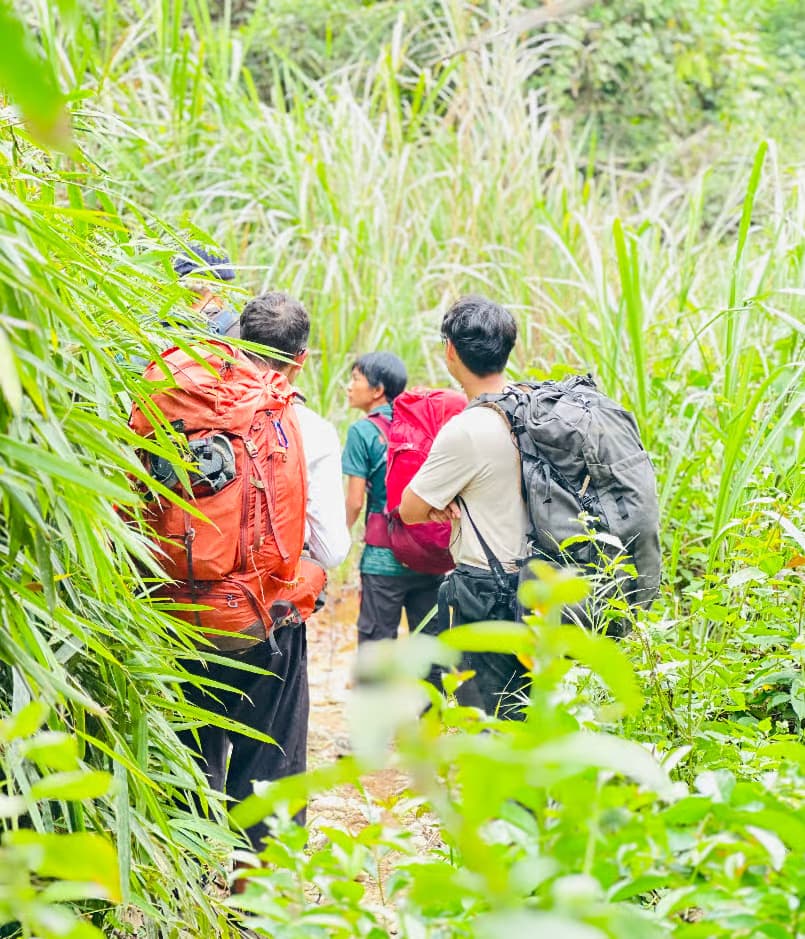
The first module establishes the foundation of professional trekking. Participants explore the role and responsibility of a trekking guide, self-assessment, co-guide structures, participant information, preparation and the practical systems needed for a safe multi-day journey. Core topics build on the previous Trekking Guide curriculum: equipment and packing, weather essentials, map and compass navigation, camp organisation, shelter and knots, water sourcing and treatment, fire, trekking food and field routines. A multi-day field component creates real conditions in which participants must organise themselves, make decisions and work as a group. Reflection, guide behaviour and personal limits are integrated throughout.
MODULE 2 – PROFESSIONAL TOUR PLANNING, NAVIGATION & NATURE EDUCATION | Online | 23–26 August 2027
The online module consolidates the experience from Thailand and develops the planning and decision-making side of guiding. Participants work with route design, coordinate systems, digital maps, GPS/altimeter use, advanced weather interpretation, risk assessment, emergency planning and participant briefings. The module also covers communication, group dynamics, conflict situations, guiding styles, responsible tourism, protected-area considerations, storytelling and nature interpretation. Case studies and planning exercises lead directly into the Cambodia field module.MODULE 3 – ADVANCED GUIDING, FIRST AID & FIELD ASSESSMENT | Cambodia | 20–26 November 2027
The final module returns to the field. Participants apply the planning from Module 2 in a demanding multi-day trekking environment and rotate through practical guide responsibilities. Training includes advanced navigation and route adaptation, night or low-visibility navigation where appropriate, camp and bivouac decisions, weather-based decision-making, realistic first-aid and emergency scenarios, group management and conflict handling. Nature mentoring, interpretation, storytelling and local cultural or historical context are integrated into guiding practice. Each participant leads defined sections of the journey and receives structured peer and facilitator feedback.